
A reflexive pronoun is a type of pronoun used when the subject and the object of a sentence refer to the same person or thing. It’s a simple yet essential part of English grammar that plays a key role in making sentences clearer and more precise. Reflexive pronouns are formed by adding “-self” or “-selves” to certain personal pronouns. For example, “myself,” “yourself,” “himself,” “herself,” “itself,” “ourselves,” and “themselves” are all reflexive pronouns. Understanding how and when to use reflexive pronouns can make your communication more effective.
Reflexive Pronoun
A reflexive pronoun is a type of pronoun that refers back to the subject of a sentence or clause. It reflects the action of the verb back onto the subject, indicating that the subject is performing the action on itself. These pronouns always end in “-self” (singular) or “-selves” (plural), depending on the number of individuals involved.
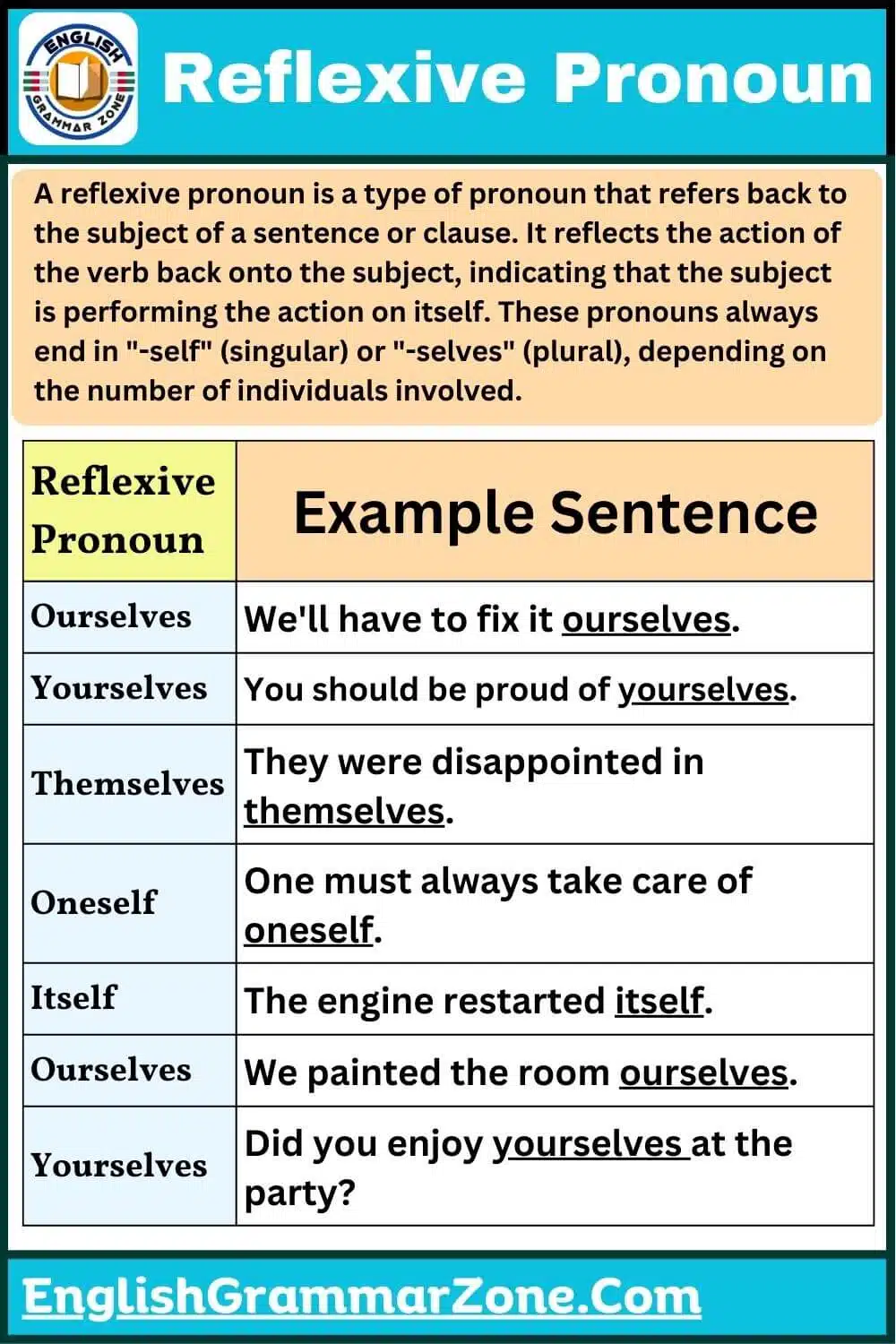
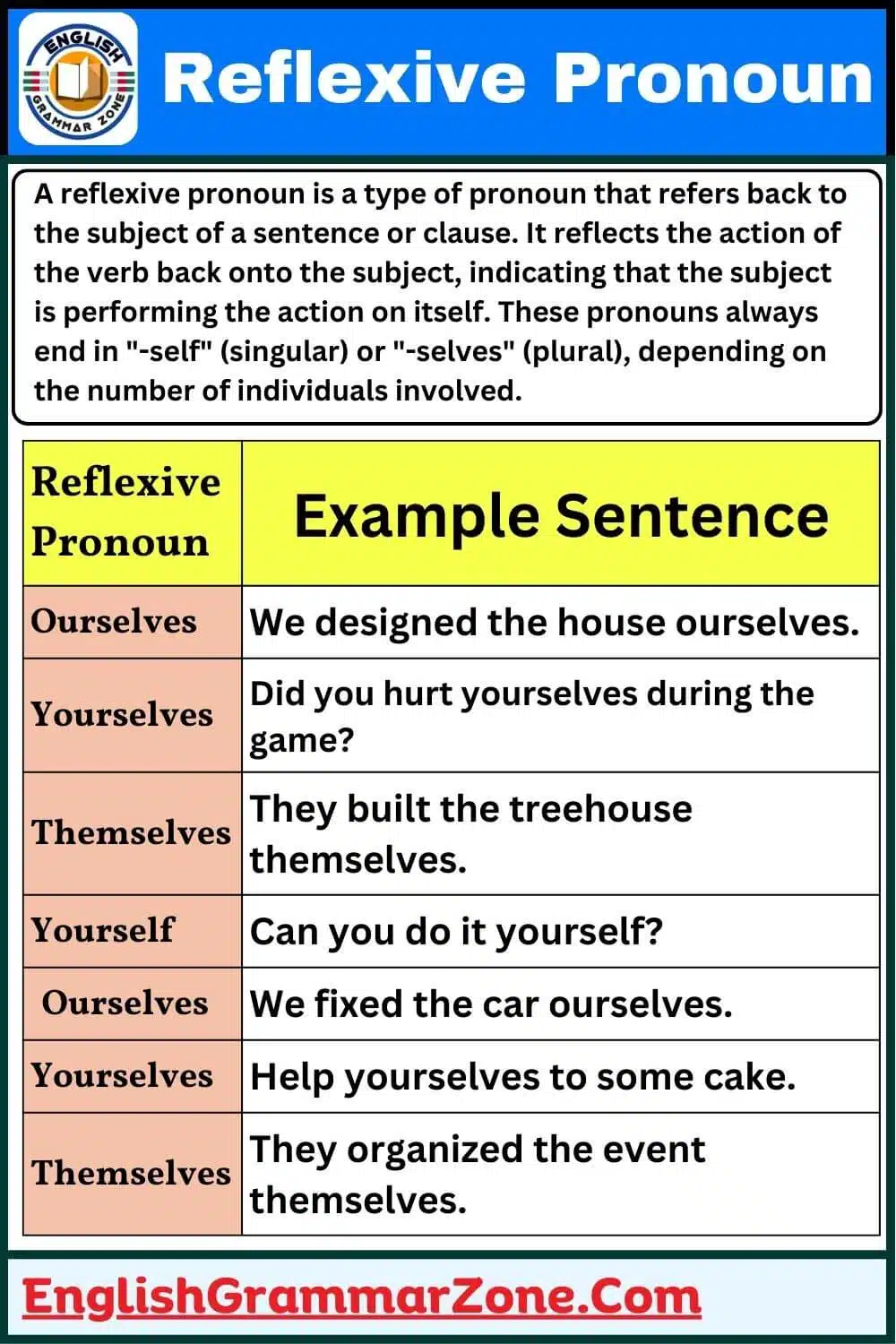
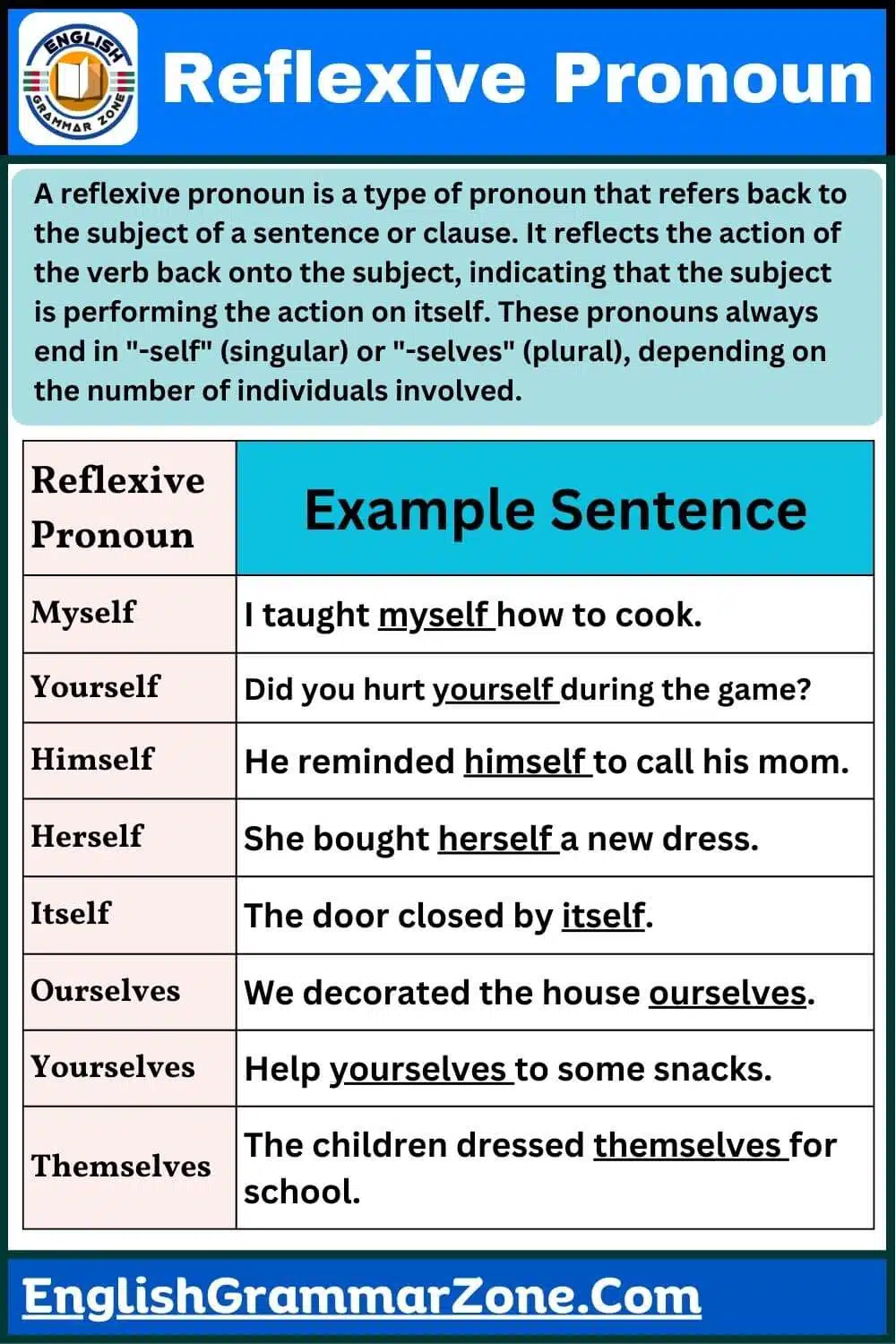
| Reflexive Pronoun | Example Sentence |
| Myself | I taught myself how to cook. |
| Yourself | Did you hurt yourself during the game? |
| Himself | He reminded himself to call his mom. |
| Herself | She bought herself a new dress. |
| Itself | The door closed by itself. |
| Ourselves | We decorated the house ourselves. |
| Yourselves | Help yourselves to some snacks. |
| Themselves | The children dressed themselves for school. |
| Oneself | One must rely on oneself in times of trouble. |
| Itself | The computer program fixed itself. |
| Ourselves | We’ll have to fix it ourselves. |
| Yourselves | You should be proud of yourselves. |
| Themselves | They were disappointed in themselves. |
| Oneself | One must always take care of oneself. |
| Itself | The engine restarted itself. |
| Ourselves | We painted the room ourselves. |
| Yourselves | Did you enjoy yourselves at the party? |
| Themselves | They completed the project by themselves. |
| Yourself | You have to do it yourself. |
| Ourselves | We designed the house ourselves. |
| Yourselves | Did you hurt yourselves during the game? |
| Themselves | They built the treehouse themselves. |
| Yourself | Can you do it yourself? |
| Ourselves | We fixed the car ourselves. |
| Yourselves | Help yourselves to some cake. |
| Themselves | They organized the event themselves. |
| Yourself | Did you enjoy yourself at the party? |
| Ourselves | We cleaned the house ourselves. |
| Yourselves | Did you hurt yourselves while skiing? |
| Themselves | They managed the project themselves. |
| Yourself | You should be proud of yourself. |
| Ourselves | We prepared the meal ourselves. |
| Yourselves | Help yourselves to the sandwiches. |
| Themselves | They completed the puzzle themselves. |
| Yourself | You can solve it yourself. |
| Ourselves | We made the decision ourselves. |
| Yourselves | Did you enjoy yourselves on vacation? |
| Themselves | They solved the problem themselves. |
| Yourself | Don’t worry, you can handle it yourself. |
| Ourselves | We need to organize it ourselves. |
| Yourselves | Help yourselves to the drinks. |
| Themselves | They figured out the answer themselves. |
| Yourself | You need to focus on yourself. |
| Ourselves | We repaired the roof ourselves. |
| Yourselves | Did you hurt yourselves in the accident? |
| Themselves | They decorated the room themselves. |
Frequently Asked Questions
What is the difference between reflexive pronouns and personal pronouns?
Personal pronouns refer to people or things, like “I,” “you,” “he,” and “she.” Reflexive pronouns, on the other hand, are used when the subject and the object are the same person or thing. For example, “I see myself in the mirror,” where “myself” refers back to “I.”
Can I use reflexive pronouns for emphasis?
Yes, reflexive pronouns can be used for emphasis. For example, “She did it herself” emphasizes that she did the action alone, without any help.
Are reflexive pronouns the same as intensive pronouns?
Reflexive pronouns and intensive pronouns are similar in form, but they are used differently. Reflexive pronouns are used when the subject and object are the same, while intensive pronouns emphasize a noun or pronoun. For example, in “I did it myself,” “myself” is an intensive pronoun. In “I hurt myself,” “myself” is a reflexive pronoun.
Can I use reflexive pronouns in every sentence?
No, reflexive pronouns are not used in every sentence. They are only necessary when the subject and object of the verb are the same or when emphasizing the subject. For example, in “She cooked dinner,” no reflexive pronoun is needed, but in “She cooked dinner herself,” “herself” emphasizes the action.
