Eating is not just about satisfying hunger—it’s an activity that brings people together, sparks conversations, and, of course, enriches language. In the English language, food- and eating-related actions are often described using phrasal verbs. These are combinations of verbs and particles (prepositions or adverbs) that change the meaning of the verb in unique ways. Whether you’re dining out, cooking at home, or enjoying a meal with friends, understanding these phrasal verbs can make your communication more natural and vibrant.
In this article, we’ll explore the most common phrasal verbs for eating. We will break them down, explain their meanings, and provide examples to ensure you can use them with confidence. By the end of this guide, you’ll not only be able to speak about food more fluently but also sound like a native English speaker in everyday conversations.
40 Phrasal Verbs for Eating
Dig in
Meaning: To begin eating eagerly.
Example: “The food is ready; everyone, dig in!”
Eat up
Meaning: To finish all the food on your plate.
Example: “You better eat up if you want dessert.”
Chow down
Meaning: To eat something quickly and with enjoyment.
Example: “We’re starving—let’s chow down on some pizza.”
Pick at
Meaning: To eat very little or only a small amount of food, often due to lack of appetite.
Example: “She didn’t eat much at dinner, just picked at her salad.”
Tuck in
Meaning: To start eating something enthusiastically.
Example: “The food looks amazing! Let’s tuck in.”
Snack on
Meaning: To eat small amounts of food between meals.
Example: “I love to snack on fruit during the afternoon.”
Wash down
Meaning: To drink something, typically liquid, to help swallow food.
Example: “I had a big sandwich and washed it down with some water.”
Cut down on
Meaning: To reduce the amount of something you eat.
Example: “I need to cut down on sugar for my health.”
Pick up
Meaning: To eat food quickly or casually, especially while on the go.
Example: “We don’t have time for lunch, so let’s pick up some sandwiches.”
Finish off
Meaning: To complete the last portion of something, usually a meal or drink.
Example: “I’m full, but I’ll finish off the last slice of pizza.”
Go for
Meaning: To choose or select food.
Example: “I’ll go for the grilled chicken.”
Heat up
Meaning: To warm up food that has already been cooked.
Example: “I’ll heat up the leftovers for dinner.”
Throw together
Meaning: To prepare food quickly, often with little effort.
Example: “I just threw together a quick salad for lunch.”
Dish up
Meaning: To serve food from a larger dish to individual plates.
Example: “Can you dish up the pasta, please?”
Cut out
Meaning: To stop eating or drinking something, often for health reasons.
Example: “I’ve decided to cut out junk food from my diet.”
Serve up
Meaning: To present or give food to others.
Example: “She served up the soup with some fresh bread.”
Take in
Meaning: To consume or absorb food.
Example: “I can’t take in too much food; I’m already full.”
Put away
Meaning: To eat a large amount of food.
Example: “He can really put away a lot of food at dinner.”
Throw out
Meaning: To discard or throw away food, often because it is spoiled.
Example: “Don’t throw out the bread; it’s still good!”
Come out
Meaning: To emerge from the oven or stove when cooking.
Example: “The cookies will come out of the oven in 10 minutes.”
Bite into
Meaning: To take a bite of something.
Example: “He bit into the apple and smiled.”
Munch on
Meaning: To eat something with a lot of chewing, usually a snack.
Example: “I’m munching on some popcorn while watching the movie.”
Go down
Meaning: To eat or drink something without difficulty.
Example: “This sandwich really goes down well.”
Clean up
Meaning: To finish eating and clear away the dishes.
Example: “I’ll clean up after dinner.”
Cut up
Meaning: To chop food into smaller pieces.
Example: “I’ll cut up some vegetables for the salad.”
Finish off
Meaning: To eat the last bit of food or drink.
Example: “He finished off the last of the cake.”
Hold off on
Meaning: To delay eating something or postponing a meal.
Example: “Let’s hold off on dessert until we finish the main course.”
Ravenous for
Meaning: To be extremely hungry and eager to eat.
Example: “I’m ravenous for some pasta right now!”
Polish off
Meaning: To finish eating something quickly, often with enjoyment.
Example: “We polished off the pizza in no time.”
Whip up
Meaning: To prepare food quickly.
Example: “I’ll whip up a quick breakfast before work.”
Take out
Meaning: To remove food from a place, usually for eating somewhere else.
Example: “We ordered takeout for dinner tonight.”
Pick over
Meaning: To examine food carefully and choose what to eat, often discarding parts.
Example: “She picked over her salad to avoid the tomatoes.”
Spit out
Meaning: To eject food from your mouth, usually because you dislike it.
Example: “I had to spit out the bitter fruit.”
Nosh on
Meaning: To snack or eat casually.
Example: “I’m going to nosh on some chips.”
Feast on
Meaning: To eat a large quantity of food, often in an extravagant way.
Example: “They feasted on a five-course meal.”
Live on
Meaning: To rely on a particular type of food as a main part of your diet.
Example: “He lives on pizza and soda.”
Binge on
Meaning: To eat excessive amounts of food, often in one sitting.
Example: “I accidentally binged on chocolate last night.”
Lay out
Meaning: To arrange or display food for a meal.
Example: “She laid out a beautiful spread for the party.”
Warm up
Meaning: To heat food that was previously cooked and has cooled down.
Example: “I’ll warm up the leftovers for lunch.”
Gorge on
Meaning: To eat a lot of food in a short period of time, often due to hunger.
Example: “He gorged on the food at the buffet.”
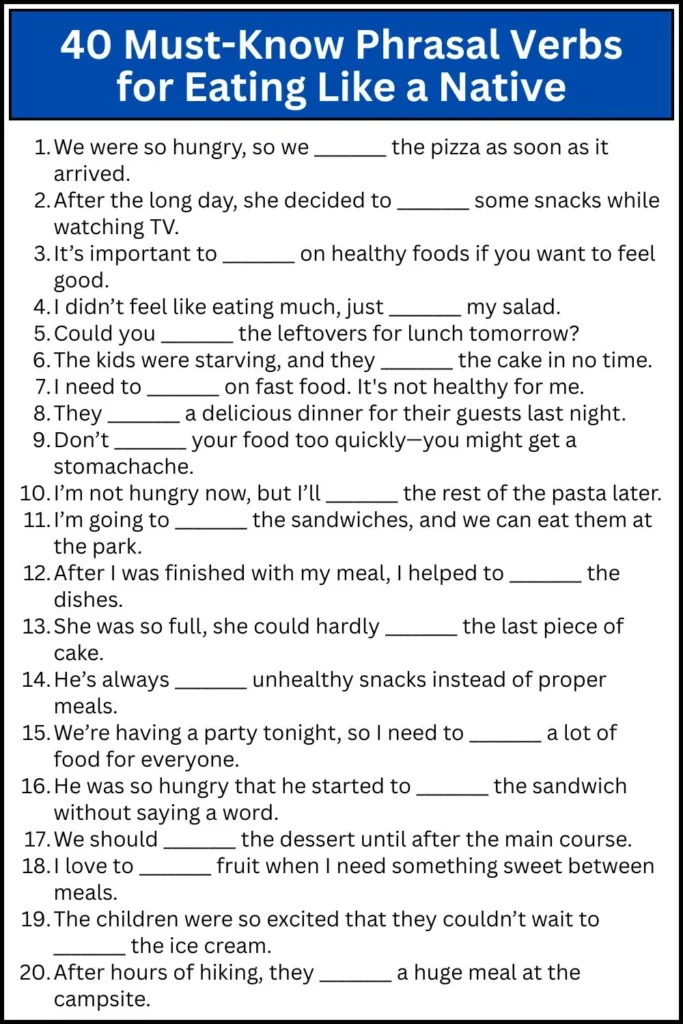
20 practice questions about phrasal verbs for eating.
Practice Questions
We were so hungry, so we ________ the pizza as soon as it arrived.
After the long day, she decided to ________ some snacks while watching TV.
It’s important to ________ on healthy foods if you want to feel good.
I didn’t feel like eating much, just ________ my salad.
Could you ________ the leftovers for lunch tomorrow?
The kids were starving, and they ________ the cake in no time.
I need to ________ on fast food. It’s not healthy for me.
They ________ a delicious dinner for their guests last night.
Don’t ________ your food too quickly—you might get a stomachache.
I’m not hungry now, but I’ll ________ the rest of the pasta later.
I’m going to ________ the sandwiches, and we can eat them at the park.
After I was finished with my meal, I helped to ________ the dishes.
She was so full, she could hardly ________ the last piece of cake.
He’s always ________ unhealthy snacks instead of proper meals.
We’re having a party tonight, so I need to ________ a lot of food for everyone.
He was so hungry that he started to ________ the sandwich without saying a word.
We should ________ the dessert until after the main course.
I love to ________ fruit when I need something sweet between meals.
The children were so excited that they couldn’t wait to ________ the ice cream.
After hours of hiking, they ________ a huge meal at the campsite.
Answers
chowed down
snack on
cut down
picked at
heat up
polished off
cut down
whipped up
gobble down
finish off
pick up
clean up
finish off
munching on
layout
devour
hold off on
snack on
dig into
feasted on
Conclusion On Phrasal verbs for eating
Mastering phrasal verbs for eating can make your English sound more natural and engaging. From “dig in” to “chow down,” these expressions help you communicate more fluently in everyday conversations. Whether you’re discussing a meal, describing eating habits, or just chatting with friends, phrasal verbs add personality and variety to your speech. By practicing these terms, you’ll sound more like a native speaker and enhance your conversational skills. So, why wait? Start incorporating these phrasal verbs into your conversations and make your English learning journey more exciting and rewarding today! Happy learning!