

Understanding verb tenses is essential for speaking and writing correctly in English. In this post, we will explore examples of past present and future tense to help you see how verbs change based on time. Whether you are a beginner learning basic sentence structures or looking to improve your grammar skills, this guide will provide clear explanations and useful examples. In this article we will learn about examples of past present and future tense inclining how to form and use these tenses confidently in everyday conversations.
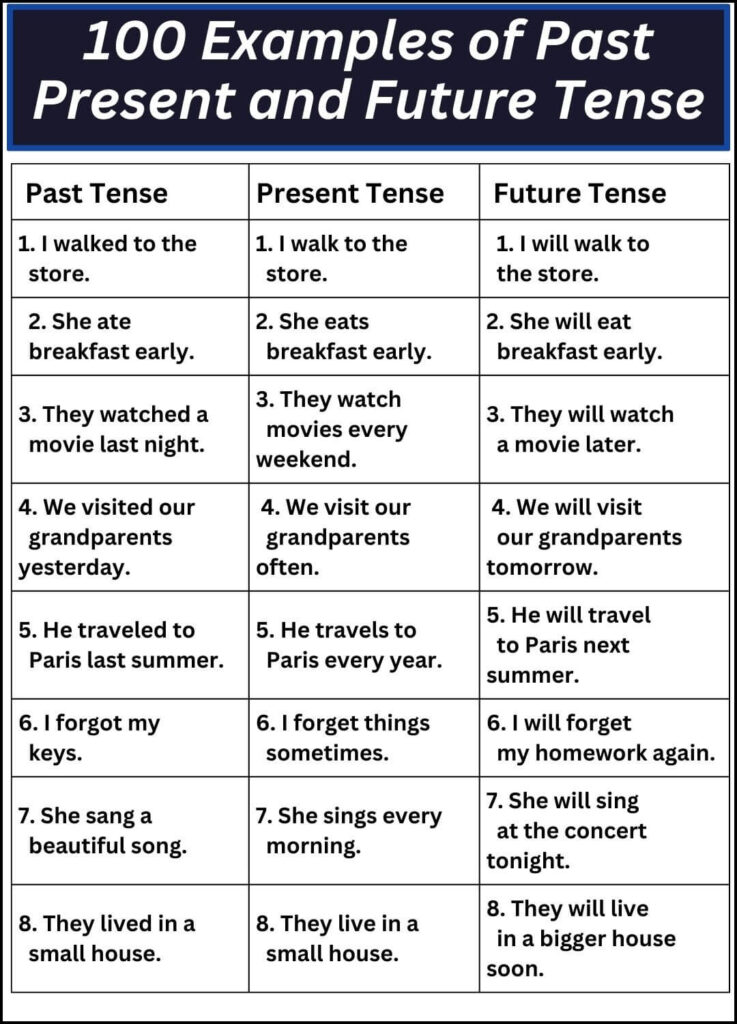
100 Examples of Past Present and Future Tense
| Past Tense | Present Tense | Future Tense |
|---|---|---|
| 1. I walked to the store. | 1. I walk to the store. | 1. I will walk to the store. |
| 2. She ate breakfast early. | 2. She eats breakfast early. | 2. She will eat breakfast early. |
| 3. They watched a movie last night. | 3. They watch movies every weekend. | 3. They will watch a movie later. |
| 4. We visited our grandparents yesterday. | 4. We visit our grandparents often. | 4. We will visit our grandparents tomorrow. |
| 5. He traveled to Paris last summer. | 5. He travels to Paris every year. | 5. He will travel to Paris next summer. |
| 6. I forgot my keys. | 6. I forget things sometimes. | 6. I will forget my homework again. |
| 7. She sang a beautiful song. | 7. She sings every morning. | 7. She will sing at the concert tonight. |
| 8. They lived in a small house. | 8. They live in a small house. | 8. They will live in a bigger house soon. |
| 9. I studied for the test last night. | 9. I study every night. | 9. I will study for the test tomorrow. |
| 10. We made dinner together. | 10. We make dinner every evening. | 10. We will make dinner together tomorrow. |
| 11. I ran to catch the bus. | 11. I run every morning. | 11. I will run tomorrow. |
| 12. She played the piano at the concert. | 12. She plays the piano well. | 12. She will play the piano at the event. |
| 13. They built a sandcastle on the beach. | 13. They build sandcastles on the beach. | 13. They will build a sandcastle tomorrow. |
| 14. He learned to drive last year. | 14. He learns quickly. | 14. He will learn a new skill soon. |
| 15. I painted a picture yesterday. | 15. I paint every weekend. | 15. I will paint something new next week. |
| 16. She spoke to her friend yesterday. | 16. She speaks to her friend often. | 16. She will speak to her friend later. |
| 17. We stayed up late last night. | 17. We stay up late sometimes. | 17. We will stay up late tomorrow. |
| 18. They saw a shooting star. | 18. They see stars every night. | 18. They will see a shooting star tonight. |
| 19. I cleaned the house. | 19. I clean the house every Saturday. | 19. I will clean the house tomorrow. |
| 20. He enjoyed the concert. | 20. He enjoys live music. | 20. He will enjoy the concert tomorrow. |
| 21. She wore a beautiful dress. | 21. She wears a dress to work. | 21. She will wear a beautiful dress tomorrow. |
| 22. We danced all night. | 22. We dance every Friday night. | 22. We will dance at the party tomorrow. |
| 23. I met a new friend yesterday. | 23. I meet new people at work. | 23. I will meet someone new tomorrow. |
| 24. They ran in the race last week. | 24. They run every weekend. | 24. They will run in the race next week. |
| 25. She baked cookies. | 25. She bakes cookies often. | 25. She will bake cookies tomorrow. |
| 26. We heard a loud noise. | 26. We hear noises sometimes. | 26. We will hear some music later. |
| 27. I visited the museum last weekend. | 27. I visit the museum occasionally. | 27. I will visit the museum next weekend. |
| 28. They cleaned the garage. | 28. They clean the garage every month. | 28. They will clean the garage tomorrow. |
| 29. He took a picture. | 29. He takes pictures every day. | 29. He will take a picture later. |
| 30. We drove to the park. | 30. We drive to the park every weekend. | 30. We will drive to the park tomorrow. |
| 31. I called my mom. | 31. I call my mom every morning. | 31. I will call my mom later. |
| 32. She gave a speech last night. | 32. She gives speeches often. | 32. She will give a speech next week. |
| 33. They studied hard for the exam. | 33. They study every night. | 33. They will study for the test tomorrow. |
| 34. I drank coffee this morning. | 34. I drink coffee every day. | 34. I will drink coffee tomorrow. |
| 35. He ran a marathon. | 35. He runs every morning. | 35. He will run a marathon next year. |
| 36. We celebrated our anniversary. | 36. We celebrate our anniversary every year. | 36. We will celebrate our anniversary soon. |
| 37. She visited her aunt last month. | 37. She visits her aunt every summer. | 37. She will visit her aunt next month. |
| 38. They moved to a new house last year. | 38. They move to a new house every few years. | 38. They will move to a new house soon. |
| 39. I made a new friend. | 39. I make new friends easily. | 39. I will make a new friend soon. |
| 40. He cut his hair. | 40. He cuts his hair every few months. | 40. He will cut his hair soon. |
| 41. We drove through the mountains. | 41. We drive through the mountains every year. | 41. We will drive through the mountains next summer. |
| 42. She cleaned the kitchen. | 42. She cleans the kitchen every morning. | 42. She will clean the kitchen tomorrow. |
| 43. They went to the zoo. | 43. They go to the zoo often. | 43. They will go to the zoo next week. |
| 44. I found my keys. | 44. I find my keys quickly. | 44. I will find my keys in the morning. |
| 45. He wrote an email. | 45. He writes emails every day. | 45. He will write an email tomorrow. |
| 46. We watched a documentary. | 46. We watch documentaries on weekends. | 46. We will watch a documentary tonight. |
| 47. They played football. | 47. They play football every Sunday. | 47. They will play football next weekend. |
| 48. I lost my wallet. | 48. I lose my wallet sometimes. | 48. I will lose my wallet again. |
| 49. She wrote a letter. | 49. She writes letters to her friend. | 49. She will write a letter tomorrow. |
| 50. They walked through the park. | 50. They walk through the park every day. | 50. They will walk through the park tomorrow. |
| 51. I ran late for work. | 51. I run to work every day. | 51. I will run late again tomorrow. |
| 52. He got a new job last week. | 52. He gets new job offers all the time. | 52. He will get a promotion soon. |
| 53. We swam in the lake last summer. | 53. We swim in the lake every summer. | 53. We will swim in the lake next summer. |
| 54. She borrowed a book from the library. | 54. She borrows books every week. | 54. She will borrow a book tomorrow. |
| 55. They painted the fence. | 55. They paint the fence every few years. | 55. They will paint the fence next spring. |
| 56. I met someone famous. | 56. I meet famous people at events. | 56. I will meet someone famous soon. |
| 57. He told a funny story. | 57. He tells stories every night. | 57. He will tell a funny story at the party. |
| 58. We ran errands all day. | 58. We run errands on weekends. | 58. We will run errands tomorrow. |
| 59. She visited a new city last year. | 59. She visits new cities often. | 59. She will visit a new city next year. |
| 60. They ate lunch together. | 60. They eat lunch at noon. | 60. They will eat lunch tomorrow. |
Examples of Past Present and Future Tense

FAQs on Examples of Past Present and Future Tense
- What is the difference between past present and future tense?
Past tense refers to actions that already happened. Present tense describes actions happening now. Future tense talks about actions that will happen later. - How do I form the past tense of a verb?
Most regular verbs form the past tense by adding -ed. For example walk changes to walked. Irregular verbs have different forms. For example go changes to went. - What are some common present tense examples?
Examples of present tense include I eat breakfast every day in simple present and She is reading a book in present continuous. - How can I use the future tense in a sentence?
You can form the future tense using will. For example I will call you later. You can also use going to. For example She is going to travel next week. - Why is it important to learn verb tenses?
Understanding verb tenses helps you communicate clearly express time relationships accurately and improve both writing and speaking skills in English